

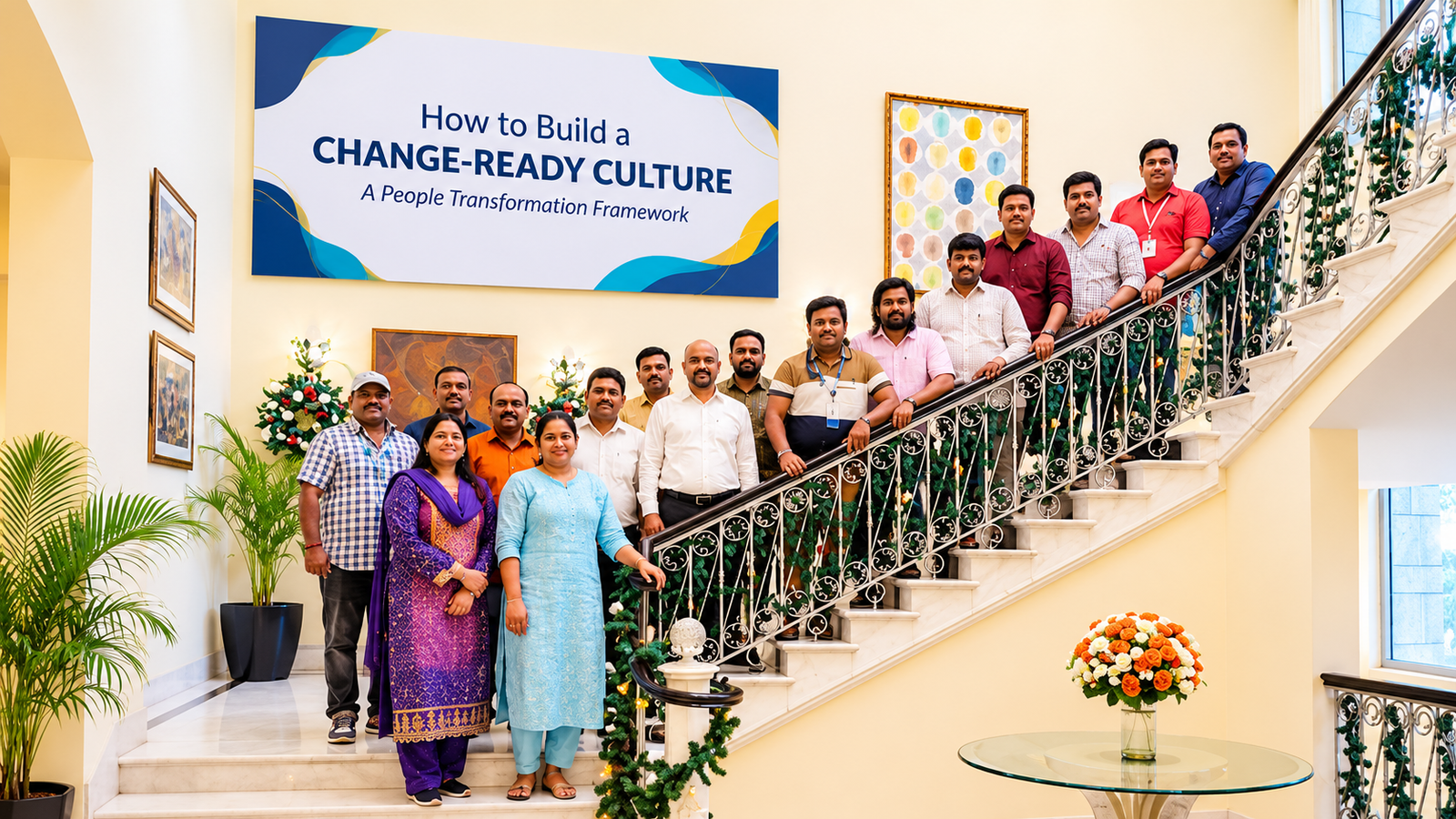
What makes some teams confident enough to take on new challenges, while others struggle with everyday workplace situations?
Imagine two teams working towards the same deadline.
One communicates openly, shares responsibilities and handles unexpected problems calmly. The other struggles with misunderstandings, unclear priorities and disagreements that slow everything down.
Both teams may have equally skilled employees. So, what makes the difference?
Often, it comes down to how people communicate, collaborate, manage pressure and lead themselves and others.
That’s where People Transformation becomes important.
Building a change-ready culture starts with developing the people who make an organisation work every day.
What Does a Change-Ready Culture Actually Look Like?
A change-ready culture is one where employees have the confidence, skills and mindset to handle challenges, work together and take responsibility.
It’s reflected in everyday workplace situations.
Can employees communicate their ideas confidently? Do managers know how to delegate responsibilities? Can team members resolve disagreements professionally? Do people manage their time and workplace stress effectively?
These abilities influence how an organisation functions, regardless of its size or industry.
A strong culture develops when employees feel equipped to contribute, collaborate and grow professionally.
Why People Transformation Matters for Organisations
A business can have talented employees, experienced managers and ambitious goals. But if communication is poor or teamwork is weak, even routine tasks can become difficult.
For example, a manager who struggles to delegate may end up handling too many responsibilities. Employees who lack confidence might hesitate to share valuable ideas. Unresolved conflicts can affect relationships and productivity.
These challenges highlight why organisations need to invest in people development.
People transformation coaching helps individuals strengthen the behavioural and interpersonal skills they need to perform effectively at work.
The focus is on building capabilities that improve individual performance, team relationships and organisational effectiveness.
A Good People Transformation Framework
Developing a stronger workplace culture requires attention to the skills employees use every day.
Here are the key areas organisations should focus on.
1. Effective Communication
Good communication is the foundation of successful workplace relationships.
Employees need to express ideas clearly, listen actively, ask questions and provide constructive feedback.
Consider how much confusion can be avoided when expectations are explained properly.
Developing effective communication skills helps teams reduce misunderstandings, strengthen professional relationships and work towards shared goals.
2. Confidence and Professional Growth
Have you noticed how some employees hesitate to speak during meetings even when they have useful suggestions?
A lack of confidence can prevent people from contributing to their full potential.
Building confidence helps employees express opinions, participate in discussions, take initiative and handle responsibilities independently.
Through practical learning and coaching, individuals can become more comfortable with everyday professional challenges.
3. Conflict Management
Disagreements are natural when people with different personalities, opinions and working styles collaborate.
What matters is how those disagreements are handled.
Effective conflict management involves understanding different perspectives, listening without judgement and finding constructive solutions.
When employees know how to manage conflicts professionally, teams can maintain healthier working relationships and avoid unnecessary tension.
4. Stress and Time Management
Deadlines, competing priorities and demanding workloads are common workplace challenges.
Without the right skills, employees may struggle to manage their responsibilities effectively.
Stress management helps individuals recognise workplace pressures and develop healthier ways to respond.
Time management focuses on prioritising tasks, organising schedules and using available time productively.
Together, these skills support better focus, efficiency and workplace well-being.
5. Leadership and Delegation
Being a good leader involves more than assigning tasks or supervising employees.
Leaders need to communicate expectations, motivate teams, make decisions and support individual development.
This is where leadership and transformation become closely connected.
Effective leadership transformation helps managers strengthen their interpersonal skills, understand team dynamics and lead with greater confidence.
Delegation is equally important. When managers assign responsibilities clearly and trust employees to deliver, they create opportunities for professional growth while improving team efficiency.
6. Teamwork and Collaboration
An organisation performs better when employees understand how to work together.
Strong teamwork involves mutual respect, shared accountability, cooperation and a willingness to support others.
People may have different strengths and working styles, but learning to collaborate helps them contribute towards common objectives.
Developing teamwork skills also encourages better communication, stronger relationships and a more positive working environment.
How Motivus Consulting Supports People Transformation
Building a strong workplace culture requires more than technical knowledge. Employees and leaders also need the behavioural skills to communicate effectively, manage responsibilities and work confidently with others.
At Motivus Consulting, we focus on developing these essential capabilities through people development, leadership training and tailored coaching programmes.
Our approach to people transformation coaching addresses areas such as effective communication, confidence building, conflict management, stress management, teamwork, time management, leadership and delegation.
Through business transformation coaching, we help organisations connect individual development with broader business objectives.
The aim is to help employees become more capable, managers become more effective and teams work together with greater clarity and confidence. Because meaningful organisational growth begins with the people behind it.
Build a Stronger Workplace Through People Transformation
A change-ready culture isn’t created through a single policy or training session.
It develops when employees have the confidence to contribute, the communication skills to collaborate and the leadership capabilities to handle responsibilities effectively.
Investing in these skills helps organisations build stronger teams, improve workplace relationships and prepare employees for future opportunities and challenges.
Ready to strengthen your team’s communication, confidence and leadership skills?
Connect with Motivus Consulting to explore how people transformation coaching can help your organisation build a more capable, collaborative and confident workforce.
Frequently Asked Questions (FAQs)
1. What is People Transformation in an organisation?
People Transformation focuses on improving employees’ behavioural, interpersonal and leadership skills to strengthen individual performance, teamwork and workplace effectiveness.
2. How does People Transformation help build a change-ready culture?
It develops communication, confidence, collaboration and problem-solving abilities, helping employees handle new responsibilities and workplace challenges more effectively.
3. What are the key skills developed through People Transformation?
Key skills include effective communication, confidence, conflict management, stress management, teamwork, time management, leadership and delegation.
4. Why is effective communication important in People Transformation?
Effective communication helps employees express ideas clearly, understand expectations, reduce misunderstandings and build stronger professional relationships.
5. How does confidence building improve employee performance?
Confidence encourages employees to share ideas, take initiative, participate in discussions and handle workplace responsibilities more independently.
6. What role does conflict management play in team development?
Conflict management helps employees address disagreements constructively, respect different perspectives and maintain positive working relationships.
7. How can stress and time management improve workplace productivity?
These skills help employees manage workloads, prioritise responsibilities, maintain focus and respond to workplace pressure more effectively.
8. How does leadership transformation benefit managers?
Leadership transformation strengthens communication, decision-making, delegation and team management skills, helping managers guide employees more effectively.
9. How does people transformation coaching improve teamwork?
People transformation coaching develops collaboration, communication and interpersonal skills that help employees work together and contribute towards shared goals.
10. How can Motivus Consulting help organisations with People Transformation?
Motivus Consulting provides people transformation coaching, leadership development and business transformation coaching focused on strengthening essential workplace and management skills.
