

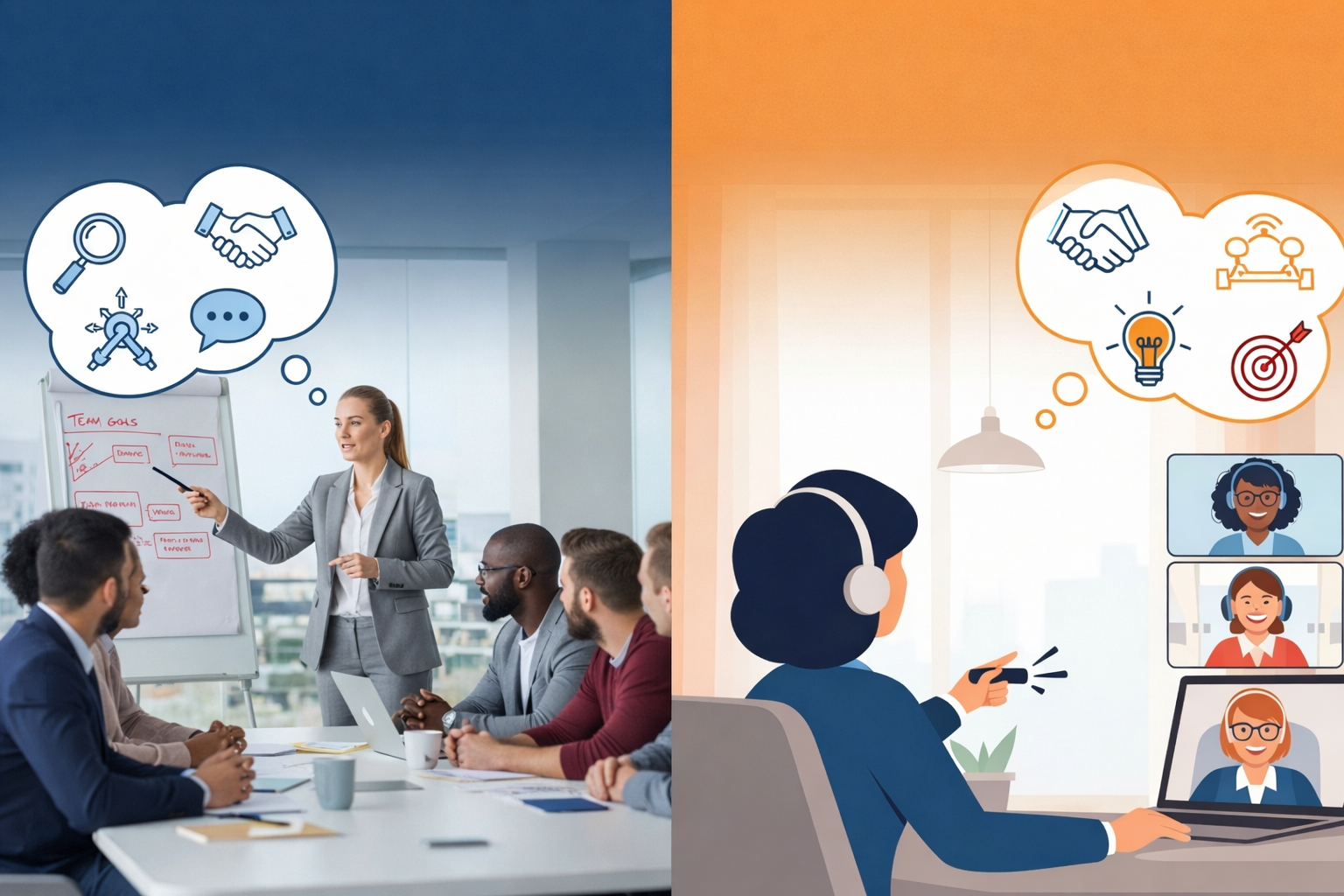
Most managers in hybrid teams recognise this feeling. On paper, everything looks fine, work is getting done, deadlines are being met and meetings are happening. Yet, something doesn’t quite feel right.
The small things start to change and people don’t talk as freely as they used to. Alignment takes longer and energy feels lower in some meetings. Small misunderstandings stay instead of getting cleared up quickly and without those casual office moments like quick check-ins, hallway conversations, and spontaneous problem-solving, teams can slowly start to feel more distant, even when they’re busy.
This is when many leaders realise something important: leading in a hybrid world isn’t just about managing tasks or using the right tools. It’s about learning a different way to lead people.
Hybrid work has changed what leadership looks like. And in 2026, the managers who succeed won’t be the ones trying to copy the old office model online. They’ll be the ones who build new leadership skills that work across distance, flexibility, and constant change.
The New Reality of Hybrid Leadership, and Why New Skills Are Needed
Leading a team used to come with a lot of natural cues. You could sense the mood in the room, notice who was struggling, and fix small issues before they became big ones.
In a hybrid world, much of that is invisible. Today’s managers lead across screens, time zones, and different working styles. They have to build trust without daily face time, stay connected without hovering, and keep people aligned without constant check-ins. It’s no longer about watching work happen, it’s about guiding it.
This is why hybrid leadership needs new skills. The old way of managing through presence and supervision doesn’t work anymore. Leaders now have to rely more on clarity, judgement, communication, and empathy. The managers who adapt don’t try to control more, they learn to lead better.
The Most Important Leadership Skills for Hybrid Teams
Here are the skills that matter most for leading teams successfully in a hybrid work world:
- Clear Communication Across Distance: Hybrid leaders don’t assume context. They clarify expectations early, repeat what matters, and check for understanding.
- Trust and Psychological Safety: When teams work apart, trust must be built on purpose. Good leaders create space for honest questions, concerns, and conversations, and they model openness themselves.
- Outcome-Based Accountability: Strong managers focus on results. They measure progress by impact and delivery, giving teams ownership along with flexibility.
- Emotional Intelligence and Empathy: It’s harder to spot stress or disengagement remotely. Leaders need to listen more, read between the lines, and check in as humans and not just managers.
- Decision-Making Without Full Visibility: Hybrid leaders often decide without perfect information. They use judgement, patterns, and input, and help teams stay confident even amid uncertainty.
- Coaching Instead of Micromanaging: The best leaders don’t control every move. They ask better questions, develop thinking, and build teams that can operate independently.
How Motivus Consulting Helps Leaders Thrive in Hybrid Work
Leading in a hybrid world needs practical, real-world behaviour change that actually shows up in day-to-day work. That’s where Motivus Consulting focuses its effort.
As a people-first business coaching and consulting firm and experienced leadership trainer, Motivus helps leaders and managers:
- Build practical leadership habits that work across remote and in-office teams
- Strengthen communication, trust, and alignment across distance
- Improve decision-making and clarity in complex, fast-changing environments
- Shift from managing tasks to leading outcomes and performance
- Apply leadership coaching directly to real, everyday leadership situations
Through leadership coaching, Motivus doesn’t aim to create perfect managers. The focus is on building leaders who are consistent, clear, and confident even when the environment is uncertain or changing.
A Final Thought
Hybrid work isn’t a temporary phase anymore. It’s the new normal.
The question for leaders is no longer whether to adapt, it’s how well they do. The managers who invest in the right leadership skills today will be the ones whose teams stay aligned, motivated, and effective tomorrow.
If you’re ready to strengthen leadership in your organisation for the hybrid world, explore how Motivus Consulting supports leaders through practical, people-first development: https://motivusconsulting.com/.
